
What Size Shed Do You Need For Farm Machinery?
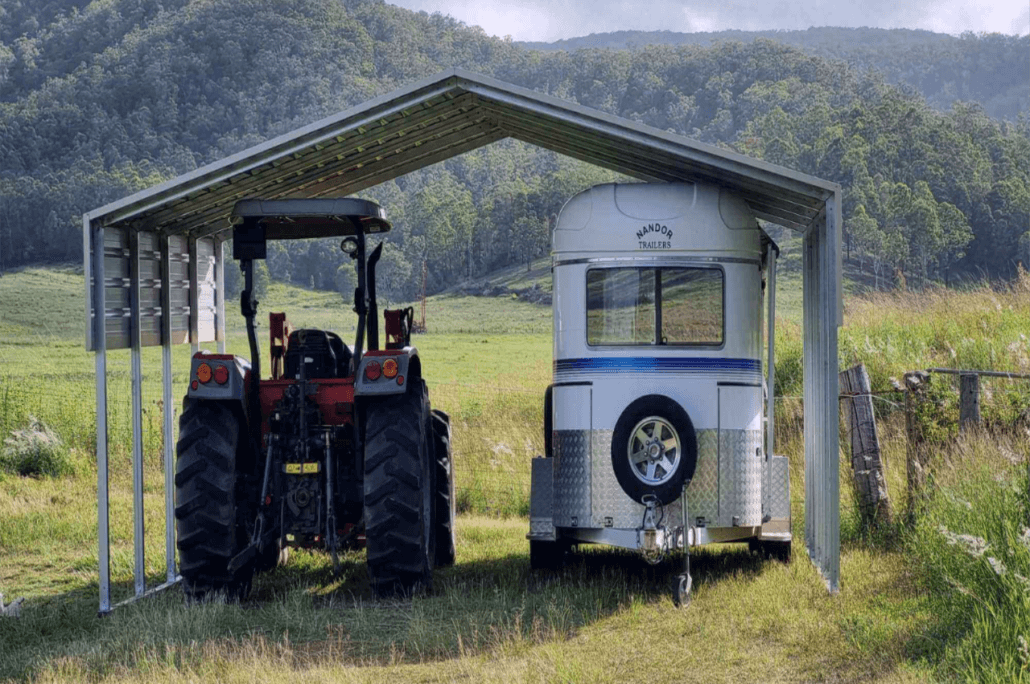
Are you wondering what size shade shed you need to protect your farm machinery?
Working out what size shed you need for your farm machinery starts with measuring your equipment at its widest, longest, and tallest points with all implements attached. The right shed size depends entirely on your specific machine, how you’ll access it, and whether you’re storing multiple pieces of equipment.
At QLD Shade Sheds, we’ve spent over a decade helping Queensland farmers work through farming and machinery storage solutions, so we understand how to calculate shed size and prevent costly mistakes. We’ve put together this farm machinery storage guide to help you measure accurately and plan adequate clearance for your operation.
Important note: This guide provides general considerations only. You’re responsible for measuring your specific equipment and determining adequate clearance. QLD Shade Sheds provides guidance to support your decision-making, but the final sizing decision is yours.
Why accurate measuring beats estimating
It’s important to take accurate measurements as two tractors with identical horsepower can have vastly different dimensions depending on manufacturer, tyre configuration, and whether they feature cabins or ROPS systems.
Modern wide-track models differ dramatically from older compact designs, whilst front-end loaders, GPS equipment, and implements all add substantial width, length, and height. The difference between a shed that works perfectly and one that’s frustratingly tight comes down to accurate measurements at the initial planning stage.
We know that your farm machinery represents a significant investment, just like we know how harsh the Queensland weather can be. So protecting your equipment from everything that our wild climate can throw at it is our goal.
How to measure farm equipment properly
Park your machinery on level ground and measure with all attachments you’ll typically store with the equipment, such as your trailer, roof rack or other accessories.
What to measure:
- The width at the widest point (often the tyres)
- Include mirrors, mud guards, and protruding components
- Length from furthest front point to rear (the loader, bull bar, or drawbar)
- Height at tallest point (the cabin roof, exhaust stack, or ROPS)
- Account for GPS equipment, aerials, or roof-mounted accessories
Write down measurements for each piece of equipment you’re planning to store. This becomes your starting point for calculating minimum shed size.
Planning for clearance and access
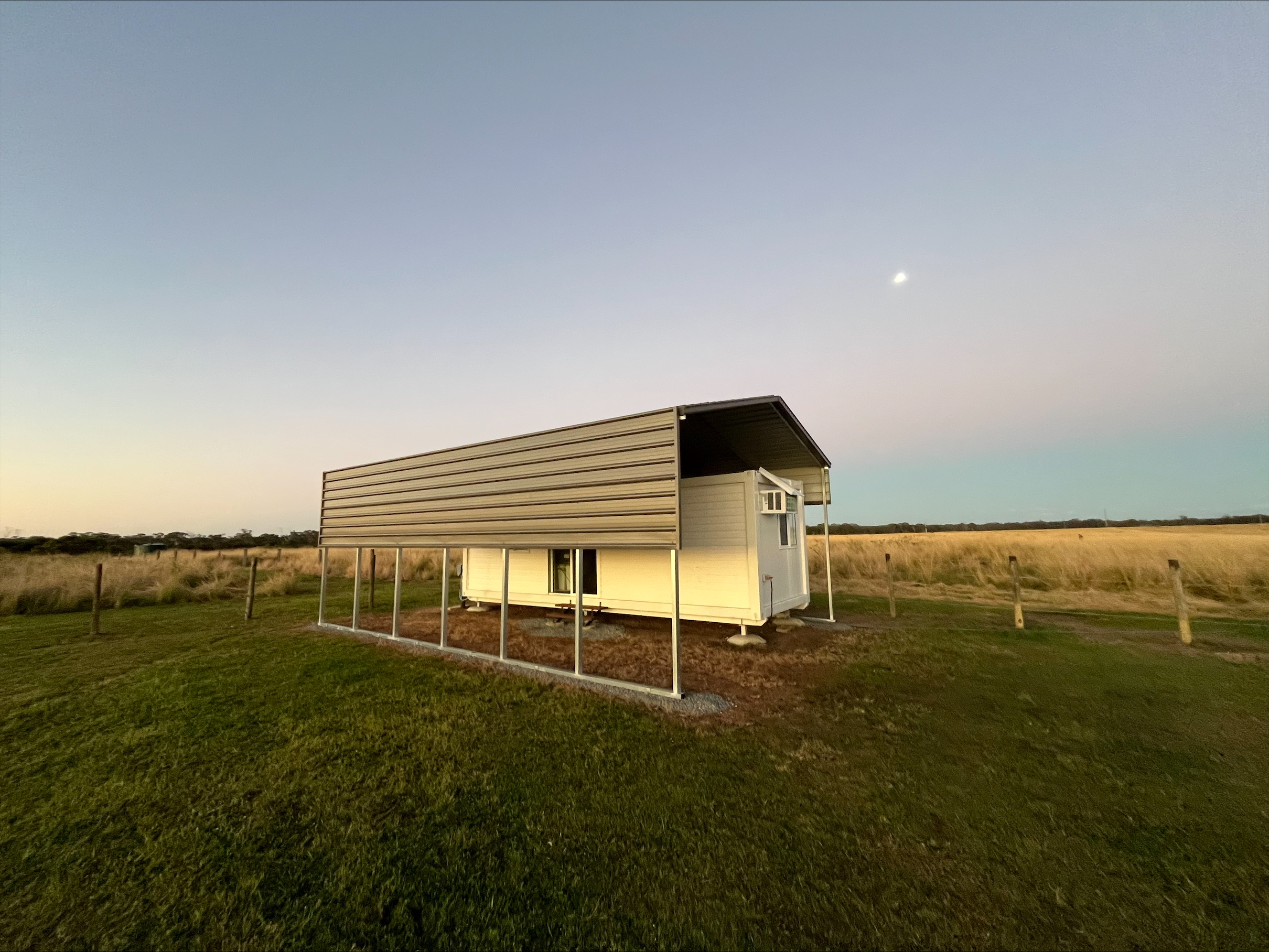
Raw machinery dimensions represent just the starting point. You need additional clearance for accessing equipment, performing basic maintenance, and manoeuvring in and out.
Consider the clearance you’ll need for walking around equipment to check tyres and fluid levels. Think about accessing attachment points for implements. And finally, factor in space for opening cabin doors if your equipment features enclosed cabs.
Manoeuvring space matters too. Driving equipment straight in and out requires less clearance than turning inside the shed. If you’re storing multiple pieces, you’ll need space to access whichever machinery you need without moving everything else first.
Calculating your total shed size for your equipment
Take your widest piece of equipment and add your required side clearances. If storing equipment side-by-side, calculate combined width plus clearance between them and on the outer sides.
For length, add front and rear clearances to your longest equipment. Height calculations should include your tallest equipment plus overhead clearance.
Remember that advertised shed widths represent external frame dimensions, not internal clearance. The actual usable space will be less due to frame components. Clearance drawings will be provided to you during the quoting stage so you can verify your equipment will fit as intended.
Measuring tip: Our structures feature portal spacing at 1400mm centres, which may influence your equipment positioning, so it’s wise to also take that into consideration when checking your measurements.
Storage layout for multiple pieces
If you’re storing several pieces of machinery under one structure, then consider which machinery you use most frequently and position it for easiest access. Seasonal equipment should go towards the back.
Side-by-side storage maximises shed length whilst requiring greater width, while front-to-back parking uses less width but needs substantial length. We recently worked with a farmer who used a combination approach for his storage, with frequently-used equipment positioned for quick access.
Common planning mistakes to avoid
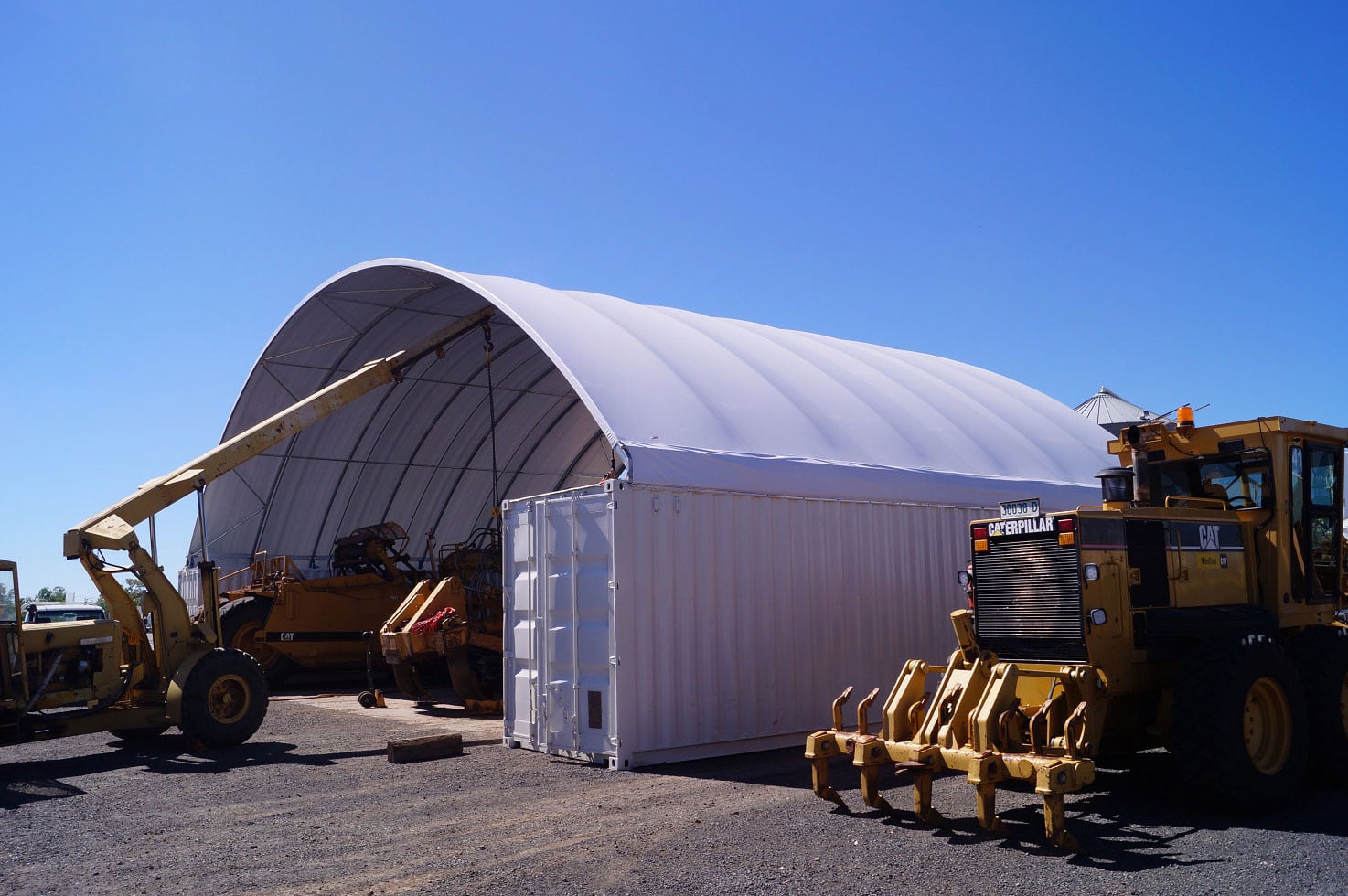
Farmers often measure equipment precisely but forget about access clearances, creating sheds that technically fit machinery but prove frustrating in practice. Another common mistake involves planning only for current equipment without considering future upgrades.
Forgetting seasonal implements causes problems too, as equipment might fit perfectly for most of the year, but when you’ve got a planter or sprayer attached, clearances become tight. Height requirements also get overlooked until equipment won’t fit so you need to always measure at the tallest point (with all attachments).
Our customisation options
We’ve been manufacturing shade sheds for Queensland farming conditions for over a decade. Our structures offer length and height customisation in 100mm increments (up to 4m side height), with a range of widths available to meet your requirements.
Learn more about our solutions designed to protect and store your farming equipment across different agricultural applications.
Ready to plan your machinery storage?
Calculating what size shed you need for your farm machinery comes down to accurate measurements, realistic clearance planning, and thinking about daily (and future) use. So, if you’re ready to discuss your requirements then get a free quote or contact us today.
We’ll provide clearance drawings and help you work through the measurements that matter to you.